

How to Obtain Italian Citizenship: Requirements, Timelines, and Procedures
Obtaining Italian citizenship means becoming a full-fledged Italian citizen, with the same rights and obligations provided for by law. For example, the right to vote, access to an Italian passport, and the ability to live and work freely in all European Union countries.
But how do you obtain Italian citizenship? What are the requirements, and what documents do you need to submit? In this guide, we’ll cover everything you need to know on the subject.
Italian Citizenship: How to Obtain It?
There are several ways to obtain Italian citizenship. The choice depends on the applicant’s personal circumstances and the reason for applying.
The main options are:
- Italian citizenship by residence, reserved for foreign nationals who have been living legally in Italy for a certain period of time;
- Italian citizenship through marriage or civil union, for those married to an Italian citizen;
- Italian citizenship by descent (ius sanguinis), for those who have an Italian parent or ancestor;
- citizenship by birth (ius soli), in the cases provided for by Italian law.
Each program has specific requirements and requires different documentation.
Italian Citizenship for Foreigners: Main Requirements
For many foreign nationals residing in Italy, the most common path is obtaining citizenship through residence.
In general, the main requirements are:
- have resided legally in Italy for the period required by law (10 years for non-EU citizens and 4 years for EU citizens);
- demonstrate sufficient and stable income;
- have no relevant criminal record;
- have a command of the Italian language at least at the B1 level of the Common European Framework of Reference for Languages (CEFR);
- Submit all the necessary documents.
The required period of residence may vary depending on the applicant’s circumstances. For some foreign nationals, 10 years of legal residence are required, while for citizens of European Union member states—as well as for political refugees—the period is shorter.
How to Obtain Italian Citizenship, Step by Step
To understand Italian citizenship and how to obtain it, it is helpful to know the main steps of the process.
1. Make sure you meet the requirements
Before submitting your application, it is important to verify that you meet all the requirements set forth by law, from the length of residence to your income status.
2. Prepare the necessary documents
The required documentation varies depending on the type of request, but generally includes:
- valid identification document;
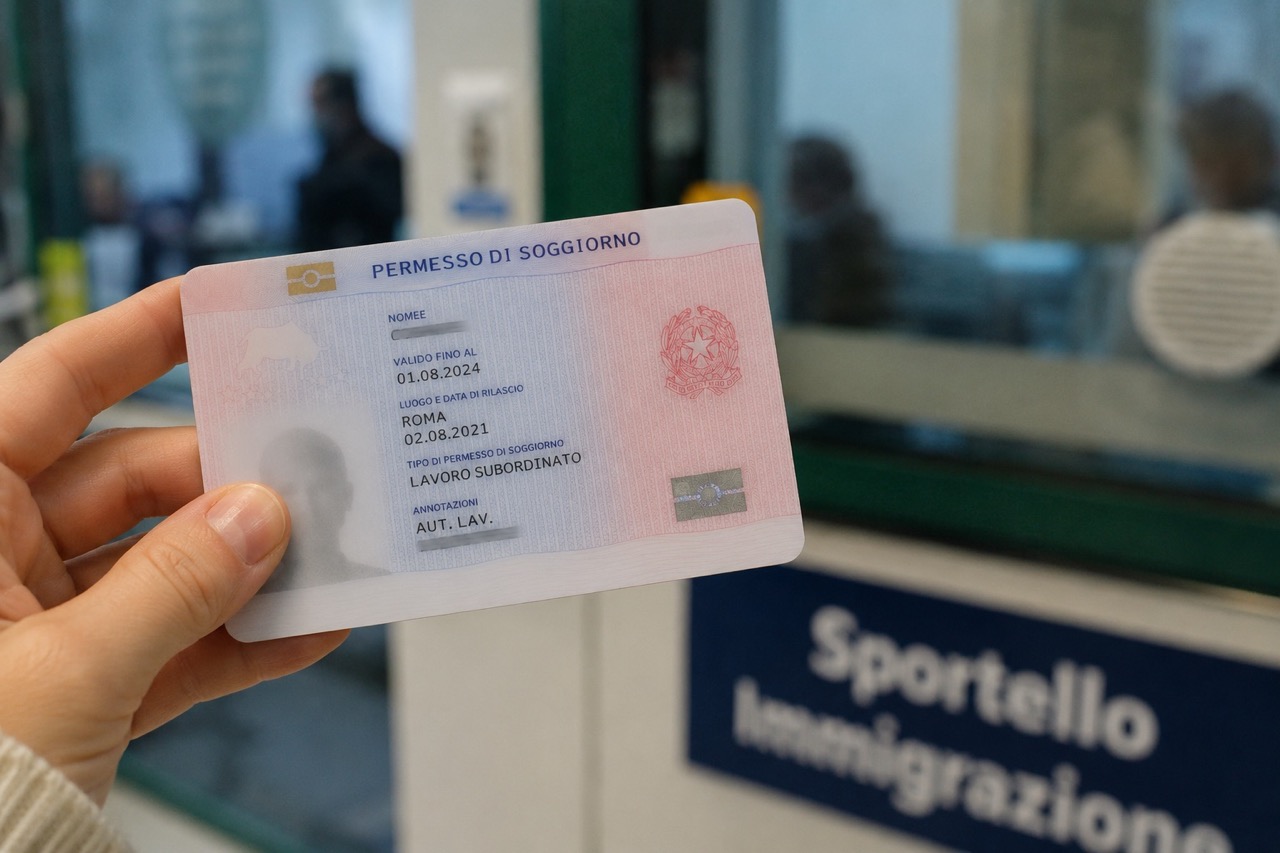
- residence permit (if required);
- birth certificate;
- criminal records from the country of origin;
- documents related to residency;
- proof of proficiency in the Italian language;
- Receipt of payment of the required fee.
Documents issued by foreign authorities must generally be translated and legalized in accordance with the prescribed procedures.
3. Submit your application online
Applications for Italian citizenship are submitted through the Ministry of the Interior’s portal. After submitting the application, the applicant can track the status of the application through the online system.
4. Wait for the request to be reviewed
During this phase, the authorities review the submitted documentation and verify that all requirements have been met. If the application is approved, the applicant receives the decree granting citizenship.
5. Take the oath
The final step is taking the oath at your local city hall.
After taking the oath, the municipality recordsthe citizenship certificate in the civil registry, thereby formalizing the acquisition of Italian citizenship. From that moment on, the person becomes an Italian citizen in every respect.
What documents are required to obtain Italian citizenship?
As we have seen, the required documents depend on the reason for the request.
For an application for citizenship based on residence, for example, the following documents are required, among others: a residence permit, proof of proficiency in the Italian language, and a tax return.
For citizenship by marriage or descent, however, specific documents are required to prove the family relationship or connection to the Italian citizen.
Recently, in 2025, with the conversion of Decree-Law No. 36/2025 into Law No. 74/2025, changes were made to the regulations governing the acquisition of Italian citizenship, leading to significant changes, for example, regarding the acquisition of citizenship by ius sanguinis.
How long does it take to obtain Italian citizenship?
The time required to obtain Italian citizenship may vary depending on the complexity of the application and the necessary checks. Currently, pursuant to Decree-Law 130/2020 (converted into Law 173/2020), the maximum time limit for completing proceedings based on residence and marriage is set at 24 months, extendable to a maximum of 36 months. (The previous 48-month deadline set by Decree-Law 113/2018 no longer applies to new applications.)
After the application is submitted, the administration proceeds to verify the requirements and documentation. For this reason, it is important to submit a complete and accurate application from the outset. Any errors in the documents or missing information can significantly delay the completion of the process.
Frequently Asked Questions About Italian Citizenship
Is it mandatory to know Italian?
Yes, for many citizenship applications, you must demonstrate adequate knowledge of the Italian language through a recognized certification or by meeting other specified requirements.
How much does it cost to apply for Italian citizenship?
For applications for residency and marriage, the government subsidy is 250 euros ( increased from 200 to 250 euros by Decree-Law 113/2018).
Under the ius sanguinis (descent) principle, the fee for submitting an application abroad through consulates is 600 euros. In addition, effective with the 2025 Budget Law (Law 207/2024), Italian municipalities may also charge a fee of up to 600 euros for this type of application. Finally, a €16 revenue stamp and the costs for legalization and translation of foreign certificates must be added to this fee.
Can you retain the citizenship of your country of origin?
In many cases, Italy allows individuals to retain dual citizenship. However, it is always necessary to check the rules of the country of origin as well.
Can you lose citizenship once you’ve acquired it?
Yes, in certain cases provided for by law, such as voluntarily performing military service or holding public office for a foreign state in a manner contrary to Italy’s interests. It is also possible to renounce citizenship by submitting a formal request, provided that the individual holds another citizenship and meets the applicable requirements. In many cases, Italian citizenship that has been lost can be subsequently reacquired by submitting a specific declaration to the competent authorities.
In conclusion
Applying for and obtaining Italian citizenship can be a lengthy and sometimes challenging process. Understanding the procedure is essential to evaluating all your options and choosing the simplest and most convenient path for your specific situation. Whether you’re applying for citizenship based on residence, marriage, or descent, it’s crucial to verify the requirements and carefully prepare all the necessary documentation.